 JinHanAI
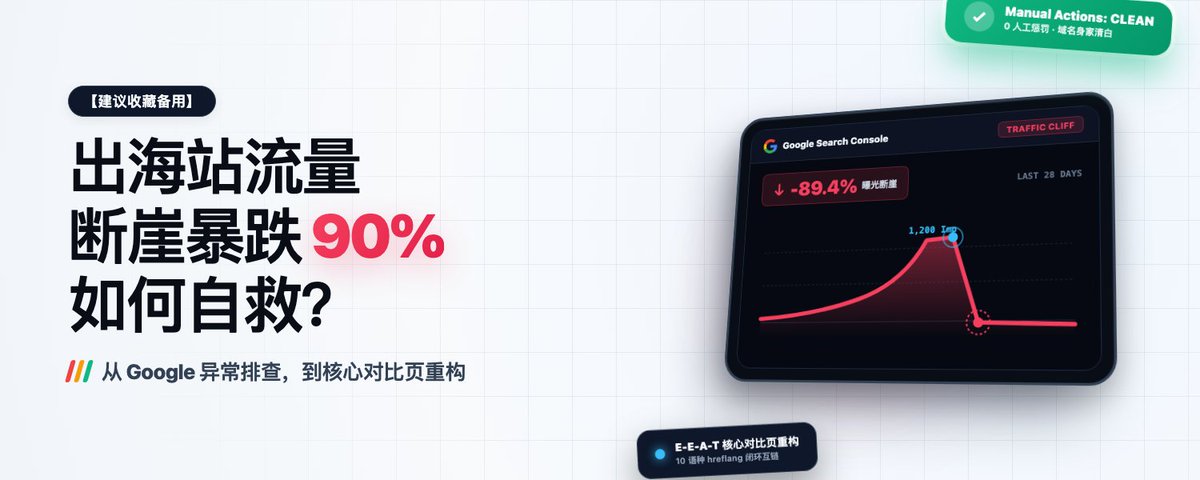
Last Saturday, I opened Google Search Console (GSC) to review the numbers for a recently launched website serving overseas readers. The impressions chart had fallen off a cliff: from more than a thousand impressions to almost zero.

A drop that steep will make anyone responsible for a website sit up. In the world of international SEO, it is easy to jump straight to the worst explanations:
- Did the site trigger Google's anti-abuse or automated spam systems?
- Had the domain or its backlinks received a manual action?
- Were recently launched pages in less widely spoken languages being treated as low-quality machine translations and losing visibility?
Experience has taught me one rule about sudden changes: do not start changing things before you know what caused them. People see a drop, panic, rewrite robots.txt, change domains, or delete pages. An ordinary ranking fluctuation can become a real incident. My first move is to leave the code and server configuration alone, follow the diagnostic process, and let the data do the talking.
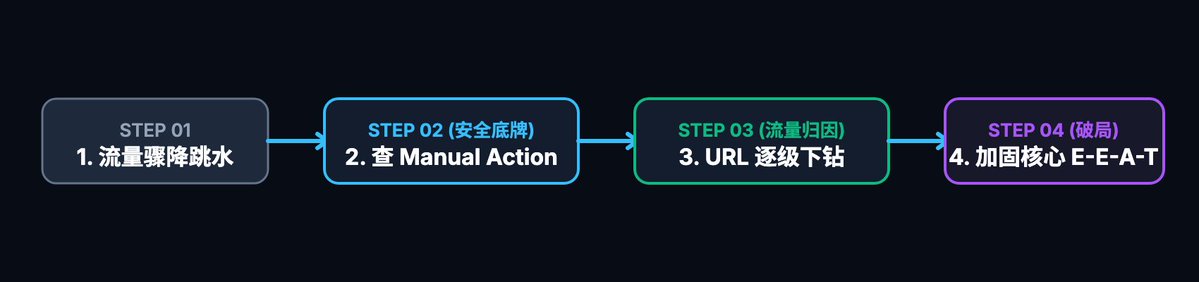
1. First, check whether Google has imposed a manual action
When impressions collapse, many beginners immediately assume they have been penalized. But a manual action and an algorithmic shift are different situations, with different checks and responses.
I went straight to the two security checks that matter most in GSC:
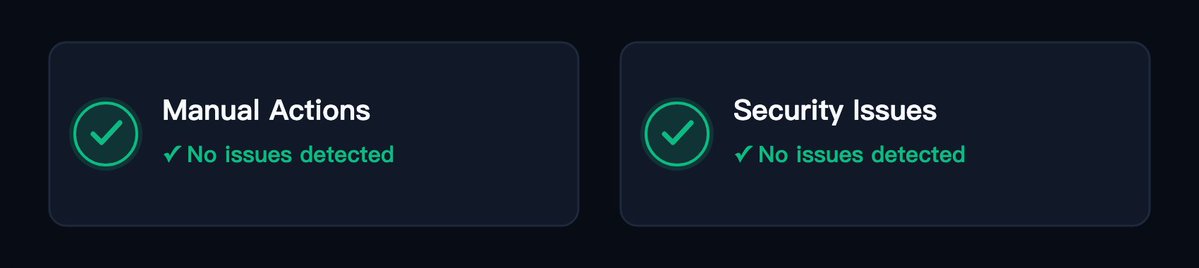
I also checked Page Indexing. The core pages were still in the green Valid/indexed list; there was no broad wave of de-indexing. My conclusion was that the site had not violated the rules and the domain was clear. The drop was entirely a question of traffic mix and how the algorithm matched the pages to demand.
2. The apparent collapse was a short-lived traffic spike fading away
After ruling out a penalty, I exported the previous 28 days of data and examined performance URL by URL. That made the underlying pattern much clearer:
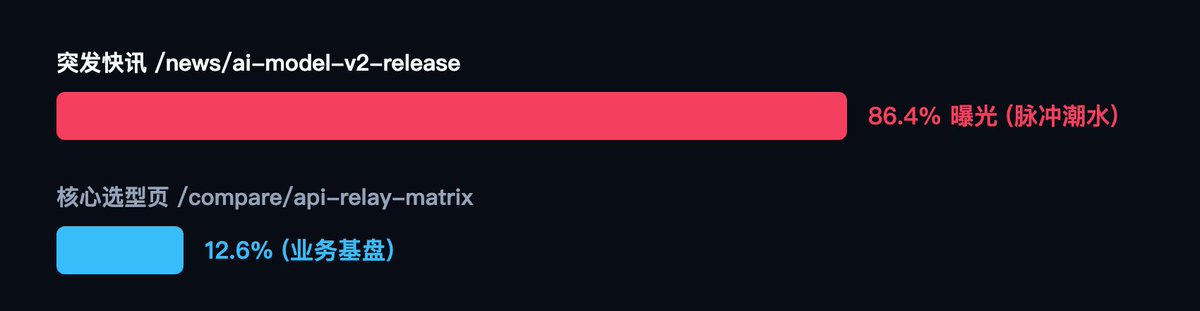
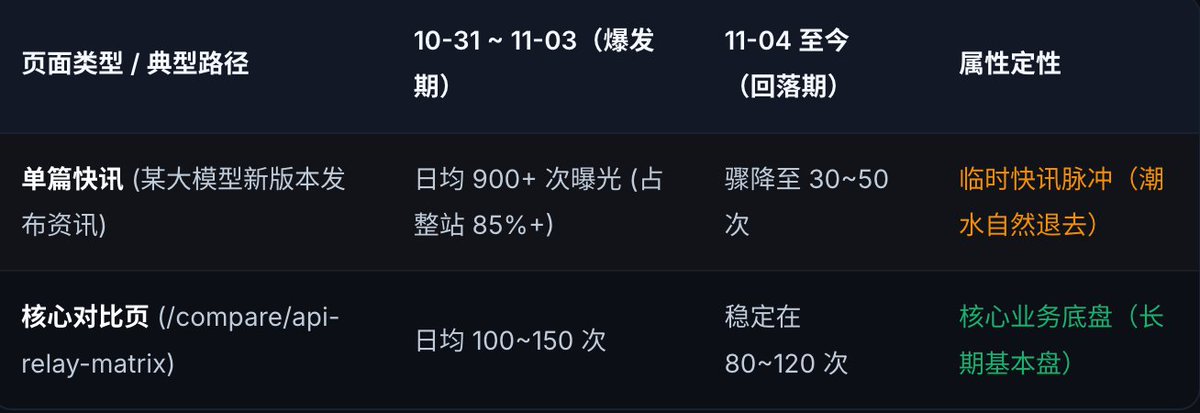
The website had not gone down. I had mistaken a brief burst of breaking-news traffic for the site's normal baseline. The news cycle lasted only 72 hours. When interest faded, search demand dropped sharply and impressions returned to zero. The spike had created a misleading picture of sustained SEO performance.
3. Then came Google's November 10 core update
A news spike fading away would have been one thing. While checking industry developments, I found that Google Search Central had just announced the November 2026 Core Update, rolling out globally.
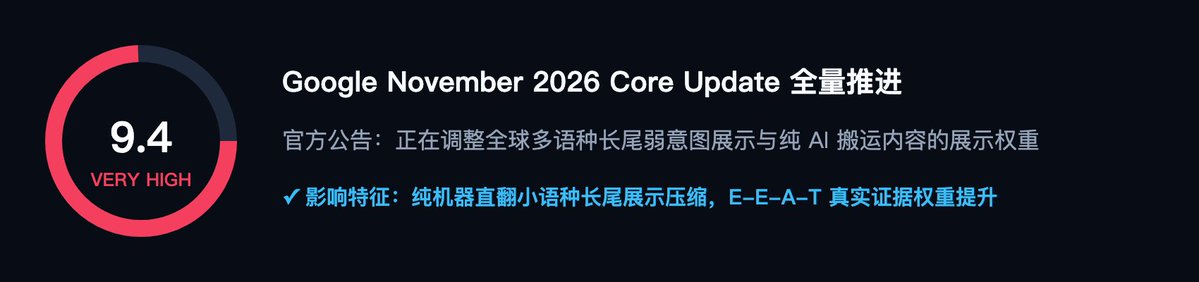
In my analysis, the update sharply reduced visibility for low-intent, long-tail queries in less widely spoken languages. Previously, even a simple translated page could pick up impressions from an obscure search. With this update, thin pages without depth or evidence of E-E-A-T were losing those placements.

4. What I rebuilt over the next 48 hours
Once I understood the pattern, the response became clearer. I left the news pages alone and concentrated on the site's main commercial comparison page, Global LLM API Aggregators and Relay Services: A Practical Comparison at /compare/api-relay-matrix.
1. Add evidence of experience and a transparent evaluation method
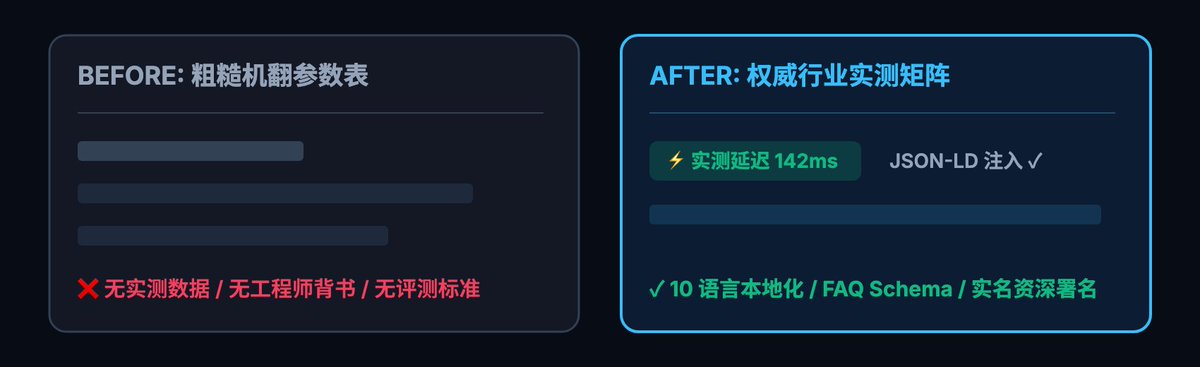
A comparison page that merely repeats a specifications table can look like repackaged information with no added value. We made four substantial changes:
- Publish measured results. Alongside scores, we published direct-connection latency in milliseconds and concurrent-load throughput measurements for major LLM APIs from Tokyo, Frankfurt, and California.
- Explain the scoring method. A separate methodology section covers SLAs, stability under concurrency, exchange-rate friction when topping up, and customer-support response times. Readers can judge how we reached the scores rather than having to trust a verdict.
- Name the engineering expertise behind the work. The page identifies its authors as Senior AI Infrastructure Engineers, states that it was updated in November 2026, and includes a revision history.
- Add structured data. We added Schema.org Dataset, FAQPage, and TechArticle markup to make the relationships between the page's entities explicit to crawlers.
2. Update all ten language versions for local readers
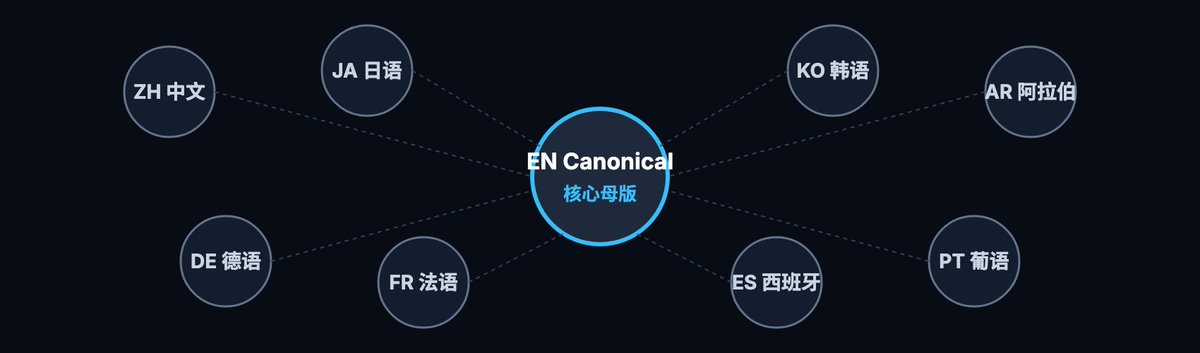
English is the source version, but there are opportunities beyond English-language searches. We updated ten versions together: English (en), Chinese (zh), Japanese (ja), Korean (ko), Italian (it), Arabic (ar, with right-to-left layout), German (de), French (fr), Spanish (es), and Portuguese (pt). Each received the appropriate reciprocal hreflang links.
3. Deploy through the controlled release process and request indexing
After the changes passed the release checks, we deployed them to Cloudflare production. In GSC, we inspected the important URLs and used Request Indexing, so Google could discover the updated comparison pages while the core update reshaped its index.

5. Four rules I would keep next to the dashboard
After those 48 hours, these were the four rules I wanted to remember:
Rule 1: Check Manual Actions before making site-wide changes. Without a manual penalty, do not rush to change domains, rewrite robots.txt, or delete pages.
Rule 2: Do not treat a short spike as your normal baseline. Breaking news can make performance look strong for a few days. The baseline only becomes clear once that demand fades. Put 80% of your effort into the core selection and comparison pages that can remain useful across cycles.
Rule 3: Keep the core structure steady during a core update. Search results can move sharply. Concentrate on evidence and content quality rather than a destructive rebuild.
Rule 4: A multilingual site needs more than an AI translation. It also needs complete hreflang links, local layout conventions such as Arabic right-to-left pages, and adjustments for local search intent. Otherwise, the new algorithm may filter those pages out in bulk.
6. Two prompts you can use for your own diagnosis
Methods are more useful when you can put them to work. Here are the two prompts I developed during this review. You can copy them into ChatGPT, Claude, or Gemini and supply your own data.
Prompt 01: Diagnose a GSC traffic drop in ten minutes
You are a senior growth architect for websites serving international markets, with 10 years of practical Google SEO experience.
My site's Google Search Console impressions or clicks have dropped sharply over the last 7 days. Help me investigate the causes using the data below.
DATA TO REVIEW
1. Site positioning: [Briefly describe the site: SaaS, tool aggregator, specialist news, e-commerce, etc.]
2. GSC security status: Manual Actions says [e.g. No issues detected]; Security Issues says [e.g. No issues detected].
3. Index coverage: Has the number of valid indexed pages fallen sharply? [Yes/No]
4. Core URL performance before and after the drop:
- URL previously responsible for the most impressions: [URL], falling from daily average X to Y.
- Other core commercial pages: [e.g. stable/declining at the same time].
5. Official Google updates: Is a Core Update or Spam Update currently rolling out? [Yes/No/Unknown]
OUTPUT
1. Diagnosis: Is this a penalty, a short-lived news spike returning to baseline, or a core update reducing visibility for marginal queries? Give clear supporting evidence.
2. Traffic distortion: Assess whether one URL made the site's overall performance look stronger than its underlying baseline.
3. Immediate response: List actions to avoid over the next 48 hours and the diagnostic steps to take now.
Prompt 02: Rebuild a commercial comparison page with evidence and structured data
You are an international growth specialist and an SEO/GEO consultant.
I want to rebuild our core product comparison page into a detailed, high-converting resource that meets the latest E-E-A-T expectations under Google's 2026 Core Update.
PAGE CONTEXT
1. Comparison topic: [e.g. five LLM API relay providers / CRM product comparison].
2. Audience and countries: [e.g. overseas developers / small international teams].
3. Main comparison criteria: [e.g. stability, measured latency, price, refund protections, concurrency support].
OUTPUT
1. Methodology: Write a professional explanation of our evaluation method that shows readers and Google that the comparison is objective, open, and based on measurements rather than unsupported promotional copy.
2. Evidence: Suggest 3 pieces of first-hand evidence for the page, such as network-latency captures, measured error rates under concurrency, or timed support responses.
3. JSON-LD: Produce nested Schema.org structured data containing Dataset, TechArticle, and FAQPage, ready to insert in the page's <head>.
Running a website for international readers is a little like sailing: rough weather and unexpected waves are normal. When GSC moves sharply, stay calm, understand the demand cycle behind the numbers, and use the setback to strengthen the pages the business depends on.
If you are working through Google ranking changes, multilingual pages, or a core comparison page of your own, I would be glad to compare notes in the discussion.